
You have probably heard it before: the greatest enemy of an investor is not the market, but their own emotions. We are always told to keep fear and greed in check if we want our portfolios to survive. But raw feelings are only half the battle. I want to introduce another two quiet killers—overconfidence and denial. Together, they form the 4 deadly roadblocks to building wealth.
I have tried my hand at crypto, chased volatile meme stocks, and dabbled in high-stakes options — and almost every time, I ended up seeing red.
Yet, the math behind personal finance is actually pretty simple. Spend less than you earn, invest the difference, and let compound interest do the work.
If the math is so easy, why do so many of us make devastatingly expensive mistakes?
Because spreadsheets don’t account for human emotions — and no one wants to get rich slow.
1. Greed: The Get-Rich-Quick Illusion
The most dangerous obstacle to building wealth is greed. The problem is, hardly anyone wants to admit they are greedy.
Instead, we disguise our obsession with fast, easy money as smart investing—like “getting in at the right time” or making a “bold decision.” In doing so, we completely blind ourselves to the massive risks we are taking.
If you remember the meme stock frenzy around January 2021, it was the absolute peak of this madness. Unlike normal investments, these stock prices weren’t driven by company earnings or financial health. Instead, they skyrocketed purely on viral social media hype and coordinated waves of retail investor enthusiasm. GameStop (GME), the poster child of this movement, exploded from roughly $17.25 at the start of the month to an astronomical intraday high of $483 on January 28 [historical figures before the 4-for-1 stock split in July 2022]—a gain of approximately 2,700%.
In plain terms, a simple $1,000 investment could have become roughly $28,000 if you had timed it perfectly. Driven purely by FOMO (Fear of Missing Out), I bought into GameStop too.
Almost immediately, the hype train ran out of steam. I watched in absolute horror as the price crashed all the way down. In the blink of an eye, I lost almost 50% of my hard-earned money. By 19 February 2021, GME had fallen to a close of $40.59. In hindsight, it seems completely illogical. But in the moment, greed completely blinded me to the massive risks I was taking.
2. Overconfidence: From Tulips to Meme Stocks

Back in the 1630s, during the Dutch Golden Age, the world witnessed what became known as Tulip Mania. Certain rare tulips became highly sought after, and speculation drove their prices to extraordinary levels.
At the height of the frenzy between November 1636 and January 1637, rare bulbs commanded thousands of guilders—reportedly enough to buy a grand canal house. When the bubble burst in February 1637, their prices collapsed, and these once-coveted bulbs returned to being valued as simple, decorative garden flowers.
I remember reading about this tulip frenzy years ago and thinking to myself, “That is so silly. Why on earth would anyone pay such an exorbitant amount of money for a flower that doesn’t even last?”
Yet, fast-forward to 2021, and I fell prey to that same human behaviour with GameStop.
One of the biggest dangers in investing is overconfidence — thinking I will pull out before the crash happens.
The asset changes, but human behaviour doesn’t.
Whether it’s a speculative Dutch tulip bulb in the 1630s or a viral Reddit stock ticker in 2021, the mechanics of a speculative bubble can look remarkably similar. Human greed and overconfidence remain the same.
3. Denial: The Toxic Revenge Trade
The initial financial loss hurts, but the mental trap that follows can be significantly worse: Denial.
Instead of walking away from my loss, I lived in total denial. I refused to accept reality and convinced myself that my luck was just temporarily bad. Desperate to recoup my losses and protect my ego, I traded again and again — falling headfirst into what is known as revenge trading.
Revenge trading strips away all logic and turns market trading into pure gambling. When you are in denial, you refuse to admit you made a bad move, leaving your portfolio completely broken.
4. Fear: The Midnight Chart Obsession
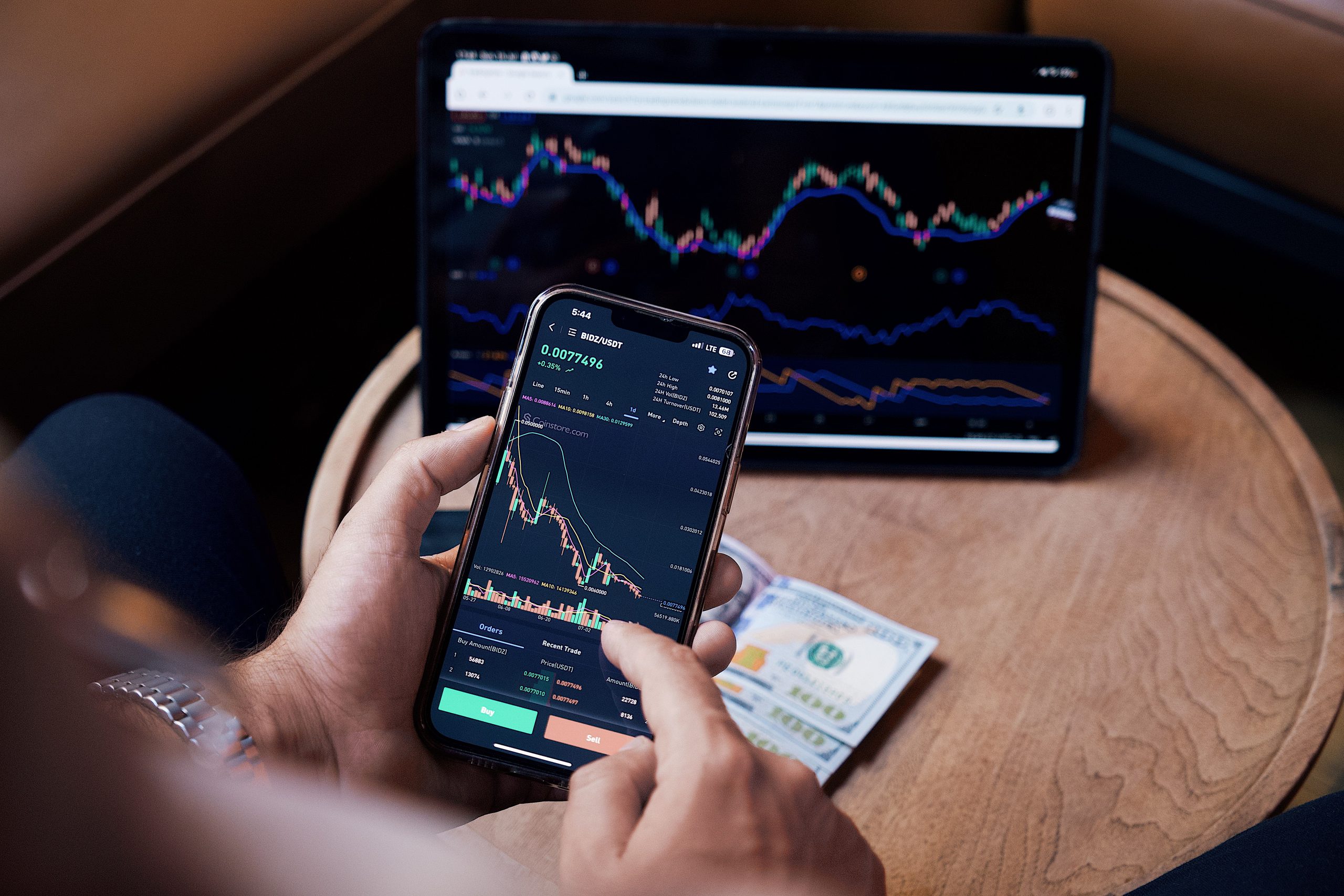
Because I was trading options on the US market from a different time zone, the anxiety completely ruined my rest. I thought I could just try to make $200 twice a week—a modest, achievable goal. I would buy into a contract, expecting the price to shoot up within the next 1 to 2 hours.
Instead, the market would drop. Sometimes after 3 or 4 hours, the price still hadn’t recovered. Driven by the fear of losing money, I stayed up to monitor the charts, wanting to sell in time before the losses got worse or catch a quick bounce if it turned around.
I ended up staying awake in vain—losing my sleep and rest just staring at the graph moving up and down and repeating this cycle without reaching my target price at all. By refusing to cut my losses and go to bed, I would finally fall asleep exhausted, only to wake up the next morning to see my portfolio down even further.
And it was all completely fruitless. I would occasionally have a single profitable day, making $300 – $600 from options, only to turn around and lose $8,000 in a single week.
At the end of the day, I realise that money that comes fast can go fast too. Protecting my rest is more important.
Warning Signs of Emotional Investing
If you find yourself in any of these situations, you may be standing on the edge of a dangerous financial trap:
- Chasing Hype (Greed): If an investment’s main selling point is social media buzz or overnight rocket emojis rather than its underlying financial value, take a step back.
- Thinking You’re Immune (Overconfidence): If you catch yourself thinking, “I know this is a massive bubble, but I am smart enough to jump out right before it pops,” your confidence is blinding you to the risk.
- The Urge to “Make It Back” (Denial): If you instantly pump more cash into a failing asset just to break even, you have stepped into the toxic cycle of revenge trading.
- The Midnight Chart Obsession (Fear): If you are staying up all night just to track market prices, you are dabbling in something that is far beyond your risk tolerance. It’s a sign to stop what you are doing.
Back to Basics
It took me years of wrestling to step out of that guilt and condemnation. The turning point came when I stopped blaming bad luck and finally admitted the truth: it was all due to greed.
The “get-rich-quick” dream is an empty illusion that I sold to myself.
Lastly, I want to share this exchange between Jeff Bezos and Warren Buffett:
“Your investing thesis is so simple. Why doesn’t everyone just copy you?” – Jeff Bezos
“Because no one wants to get rich slowly.”
– Warren Buffett
Slow and steady is still the way to go.
Stay restful! 🌱